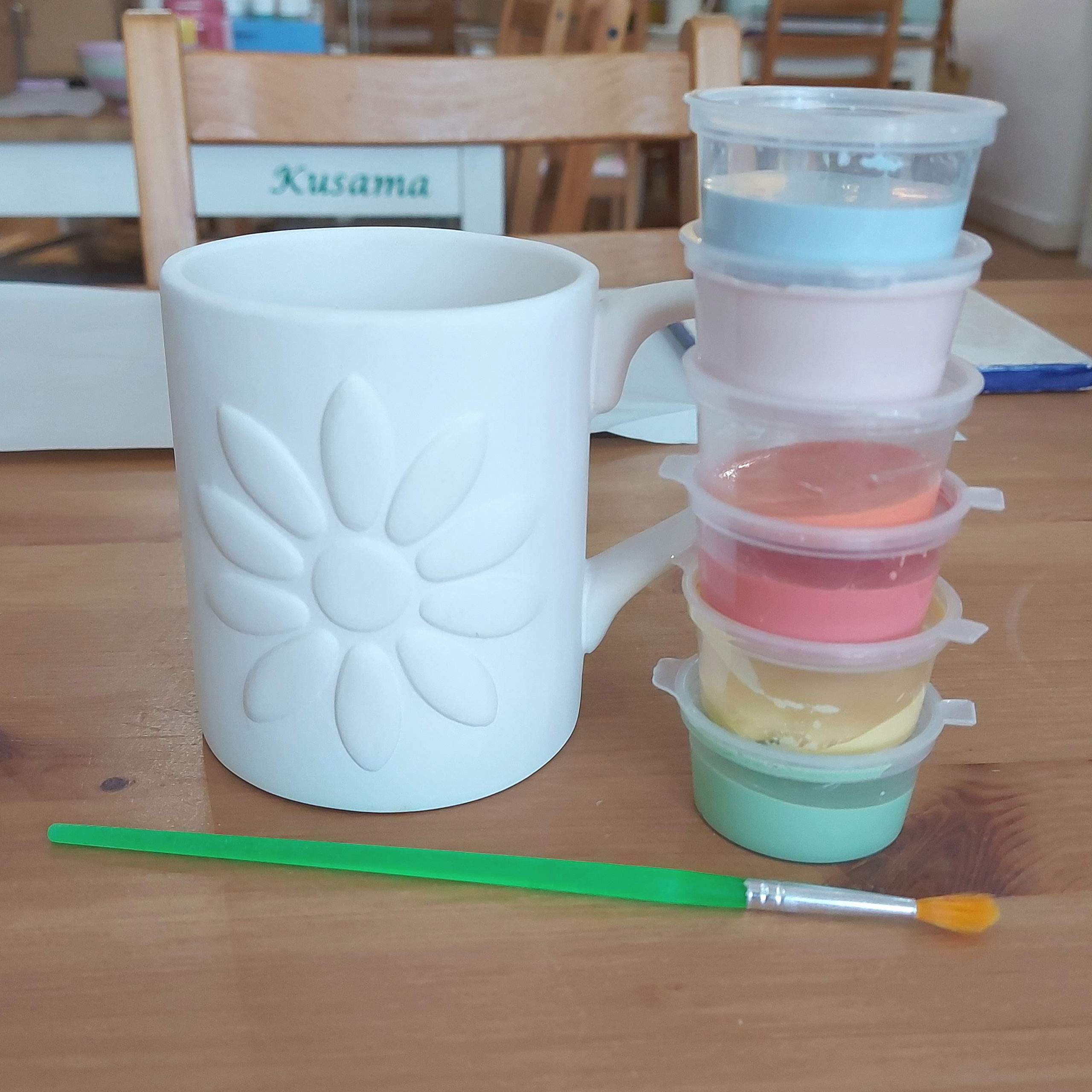
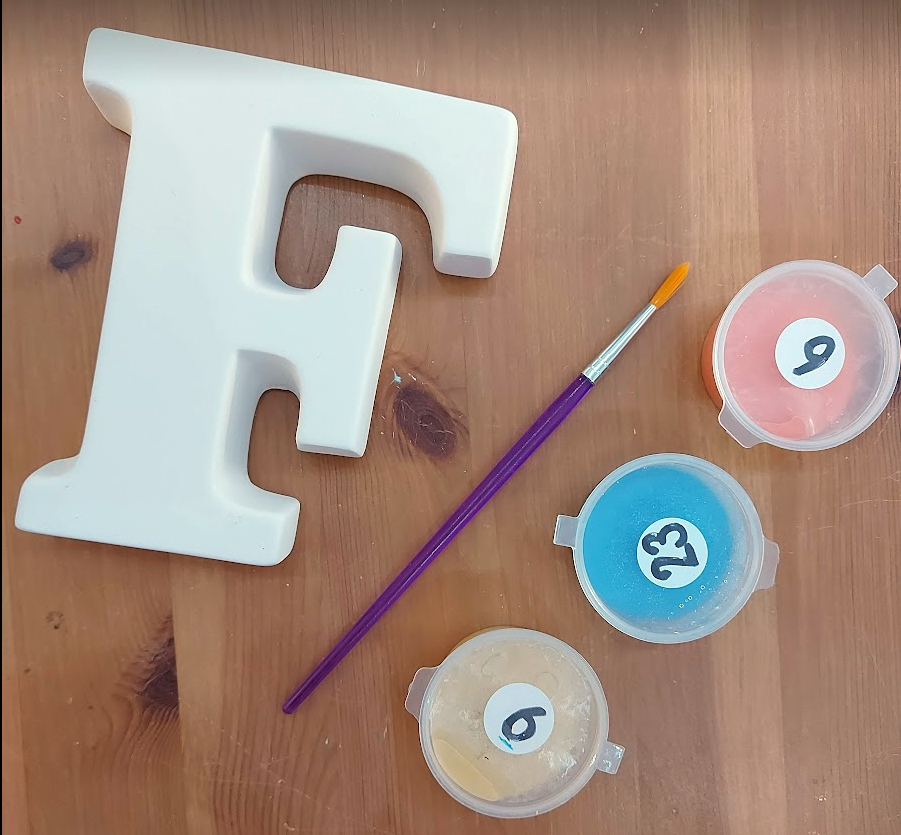
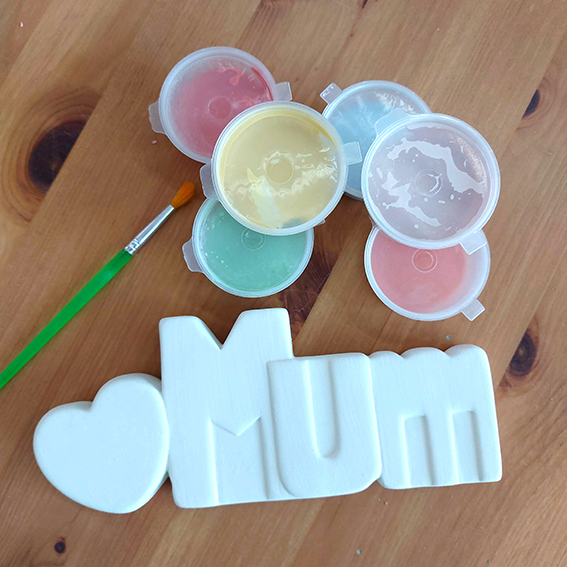
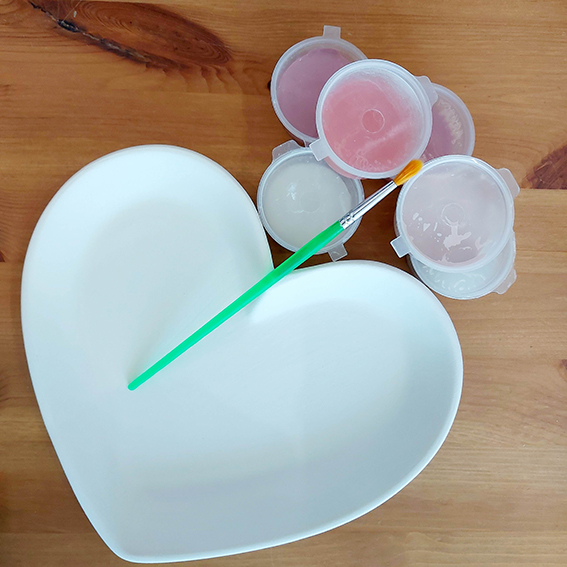
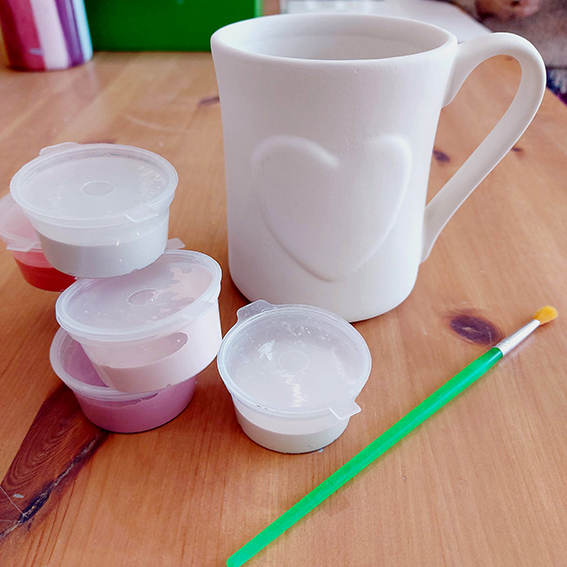
If you’d prefer to paint at home rather than in the studio, we’ve got you covered. Our take-home pottery kits are perfect for cosy date nights, relaxed evenings with friends or bigger projects where you’d like more time to create at your own pace.
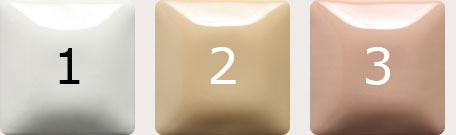
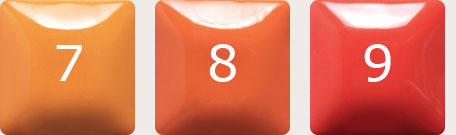
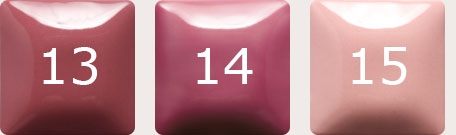
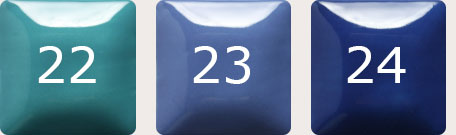
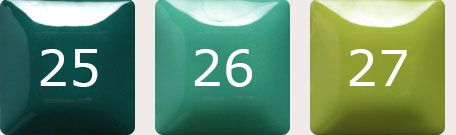
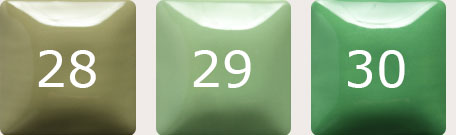
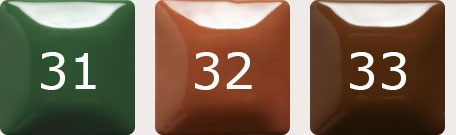
Pop into the studio and choose your ceramic piece from our shelves — animals, letters, functional items like plates, mugs and bowls, plus plenty more. Then pick your paints from our ready-to-go colour pots at £1 per pot (choose 10 and get 2 free). Each item requires a minimum of 3 paints to cover glazing and firing, and because paints are pre-mixed and ready to take away, there’s no waiting involved — you can go home and start painting straight away.
If you’re planning a celebration or group activity at home, our Birthday Boxes make things even easier with everything included — full details are on our Birthday Gatherings page.
Painting Tips
GENERAL TIPS
Use light colours first as light colours will not show over dark colours so plan your work!
Apply 3 even coats for a solid colour
Add a little water if the paint is too thick
Use felt pen to draw designs – the pen will not show once fired DO NOT USE A PENCIL
Clean brushes between colours
CREATING DOTS
Dots can be created using the other end of the paintbrush. You can create different size dots depending on the size of the brush. Practice on some paper to get the right size. You’ll see the size of the dot decreases with each impression. These dots make great eyes!
BLENDING
Different paint colours can be blended to create a graduated effect. This does take some practice, but is a superb technique for using colour, especially for rainbows. The paint needs to be loosened with water first, and blended with long brush strokes so the colours mix together where they touch.
SPONGING
Sponging is an easy technique to master which is great for covering large areas. Soak the sponge in paint (don’t add any water) and dab the sponge all over the item. Try to get an even coat as the texture will show once it’s fired.
WASHES
Washes are a great way to cover a large area with a background colour, but you will need to choose a light colour if you intend to add a design on top. Loosen the paint with water to create a thin solution. Using a large brush, cover the surface of your bisque, working quickly as the paint dries quickly! The more layers you add, the darker the colour will be.